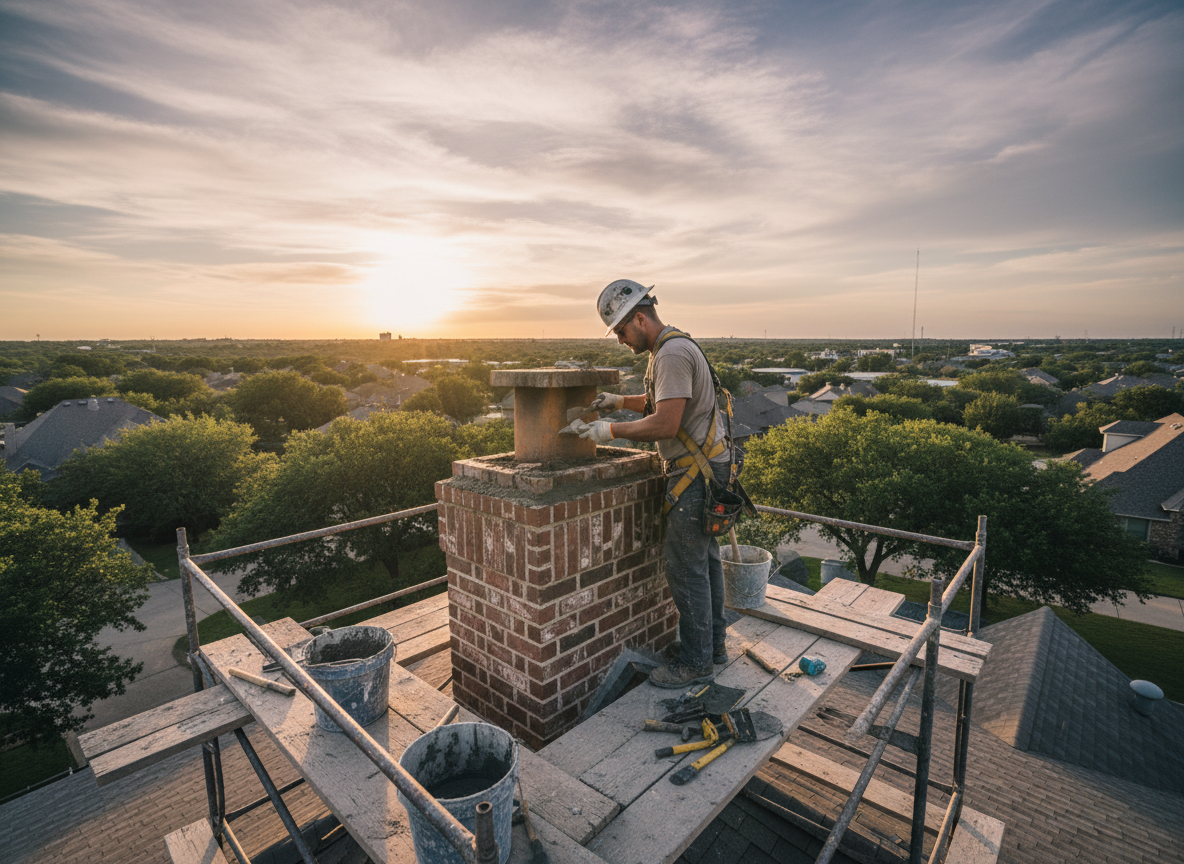
Benbrook homes built from the 1960s onward often feature masonry chimneys tied into brick or stone exteriors that sit exposed on sloped lots. Freeze-thaw cycles in winter followed by heavy spring rains push water behind the crown and through deteriorating mortar joints, allowing moisture to reach the flue liner and framing. Technicians at Servanta Edge start every call by checking the flashing where the chimney meets the roof deck, because wind-driven rain from the west commonly finds gaps at the step flashing on these older roofs.
When a homeowner notices white efflorescence on the interior brick or a musty smell after a storm, the issue is rarely just the cap. We trace water paths through the smoke chamber and check for cracked clay tiles that let creosote and moisture reach the wood framing. In Benbrook’s clay-heavy soils, minor foundation movement can tilt the chimney slightly, breaking the bond at the roofline and creating new leak points that standard caps will not stop.
Repairs here focus on rebuilding the crown with a proper slope and installing stainless-steel caps that allow airflow while blocking rain. We also re-point mortar using type N mix matched to the original brick, because harder modern mortar traps moisture against softer historic units and accelerates spalling during the next freeze. Every job ends with a smoke test to confirm draft before we leave the property.
Technician insight
In Benbrook, the thing that catches most people out with chimney repair is how the clay soils shift the foundation just enough to crack the crown and open the flashing on the west side of the roof. Homeowners often replace only the cap and wonder why water still appears after the next freeze. Checking the bond between chimney and roof deck first saves repeat visits.
West-side flashing failure after winter freeze
Water stains appeared on the living-room ceiling after a January cold snap. Inspection showed the crown had hairline cracks and the step flashing on the west slope had lifted. We rebuilt the crown with a correct pitch, replaced the damaged flashing, and repointed the upper courses. The smoke test passed and no further staining occurred during spring rains.
How it works
- 1
Inspection
We examine the crown, flashing, flue liner, and smoke chamber from the roof and fireplace opening to locate active leaks and structural movement.
- 2
Water Path Diagnosis
Technicians trace moisture routes through mortar joints and around the damper to identify whether roof flashing or crown failure is the primary source.
- 3
Targeted Repair
We rebuild the crown, repoint joints, or replace damaged flashing using materials suited to Benbrook’s brick stock and seasonal temperature swings.
- 4
Verification
A final smoke test confirms proper draft and we document all work performed before leaving the site.
Pricing
Upfront quotes provided after on-site inspection; cost varies with chimney height, extent of masonry damage, and roof access.