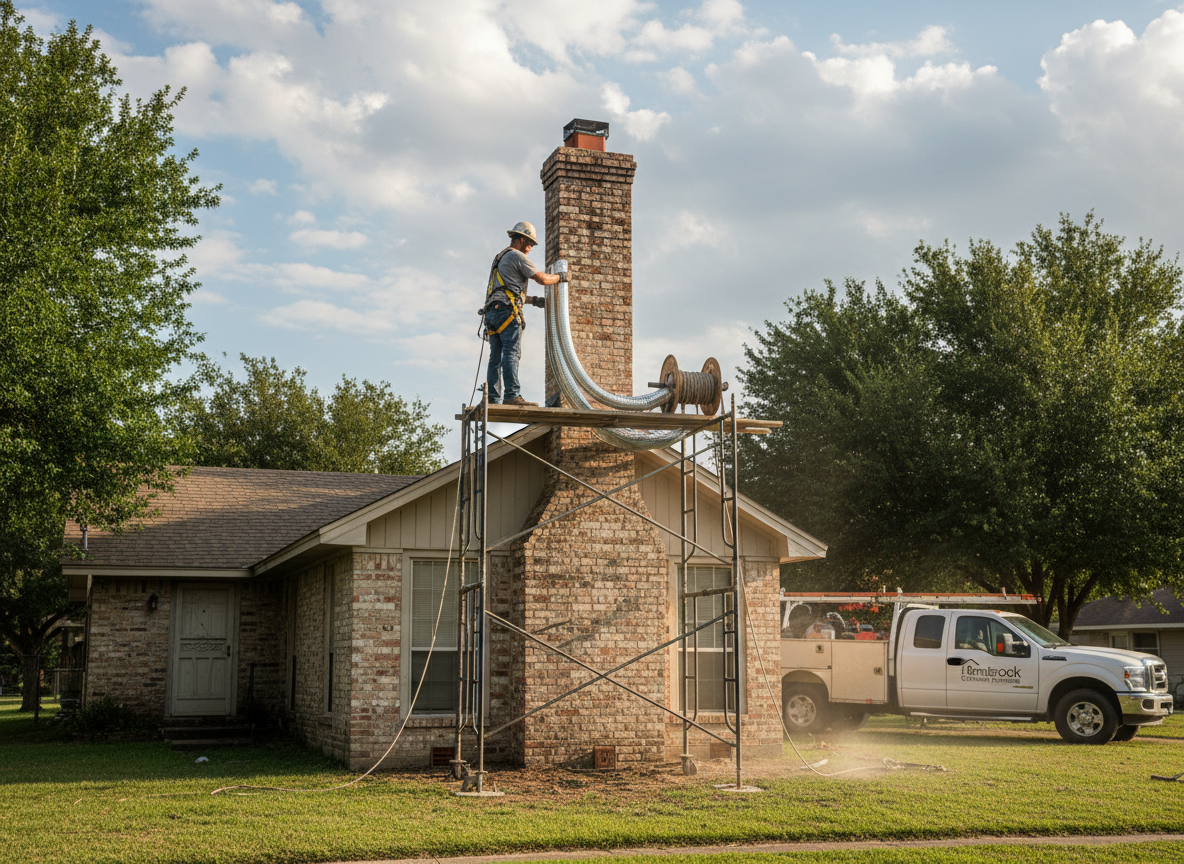
Benbrook homes built from the 1960s through 1980s in neighborhoods near Benbrook Lake often feature masonry chimneys with original clay tile liners that crack under the rare but intense freeze-thaw cycles of Tarrant County winters. Relining with stainless steel or cast-in-place materials seals these fractures, prevents creosote penetration into brickwork, and restores draft without full chimney rebuilds. Homeowners in areas like Western Hills or along Camp Bowie West see improved performance after relining because the new liner handles the rapid temperature swings common when cold fronts move through north Texas.
The process requires precise measurements of flue height and bends, which vary widely in two-story homes common around Benbrook. We use UL-listed liners sized to the appliance and fuel type, ensuring compliance with local adoption of NFPA 211 standards enforced in Tarrant County. Edge cases include shared flues in duplexes near the railroad tracks or offsets created by additions on older ranch-style properties. Proper insulation around the new liner prevents condensation that accelerates corrosion in humid summer months.
Attempting to patch liners instead of full relining often fails here because water infiltration from heavy spring rains travels through existing cracks and damages surrounding masonry. A thorough camera inspection first reveals hidden damage from previous chimney fires or neglected creosote buildup. Relining also addresses draft issues caused by oversized flues in homes converted from wood to gas appliances, a frequent occurrence in Benbrook's established neighborhoods.
Technician insight
In Benbrook, the thing that catches most people out with chimney relining is the hidden water damage behind the brick on 1970s homes near the lake, where poor flashing lets spring rains reach the original clay liner and turn small cracks into full separations that only show up once we pull the old liner.
Cracked Liner in Western Hills Home
A Benbrook homeowner noticed smoke in the living room during the first cold snap. Camera inspection revealed multiple fractures in the clay liner of a 1978 chimney. We installed a stainless steel liner sized for the gas insert, sealed the top plate against further water entry, and restored proper draft without disturbing the exterior brickwork.
How it works
- 1
Initial Camera Inspection
We scope the flue from the firebox to the crown to map cracks, offsets, and creosote levels specific to the chimney's construction in Benbrook homes.
- 2
Flue Measurement and Liner Selection
Exact diameter and height are recorded to choose the correct stainless steel or cast-in-place liner rated for the fuel type and local wind loads.
- 3
Liner Installation
The new liner is inserted and secured with proper insulation, sealing the flue against moisture and improving draft efficiency.
- 4
Final Testing and Cleanup
Smoke testing confirms proper draft, followed by debris removal and a walkthrough with the homeowner.
Pricing
Cost depends on chimney height, number of flues, and liner material; we provide upfront quotes after inspection.