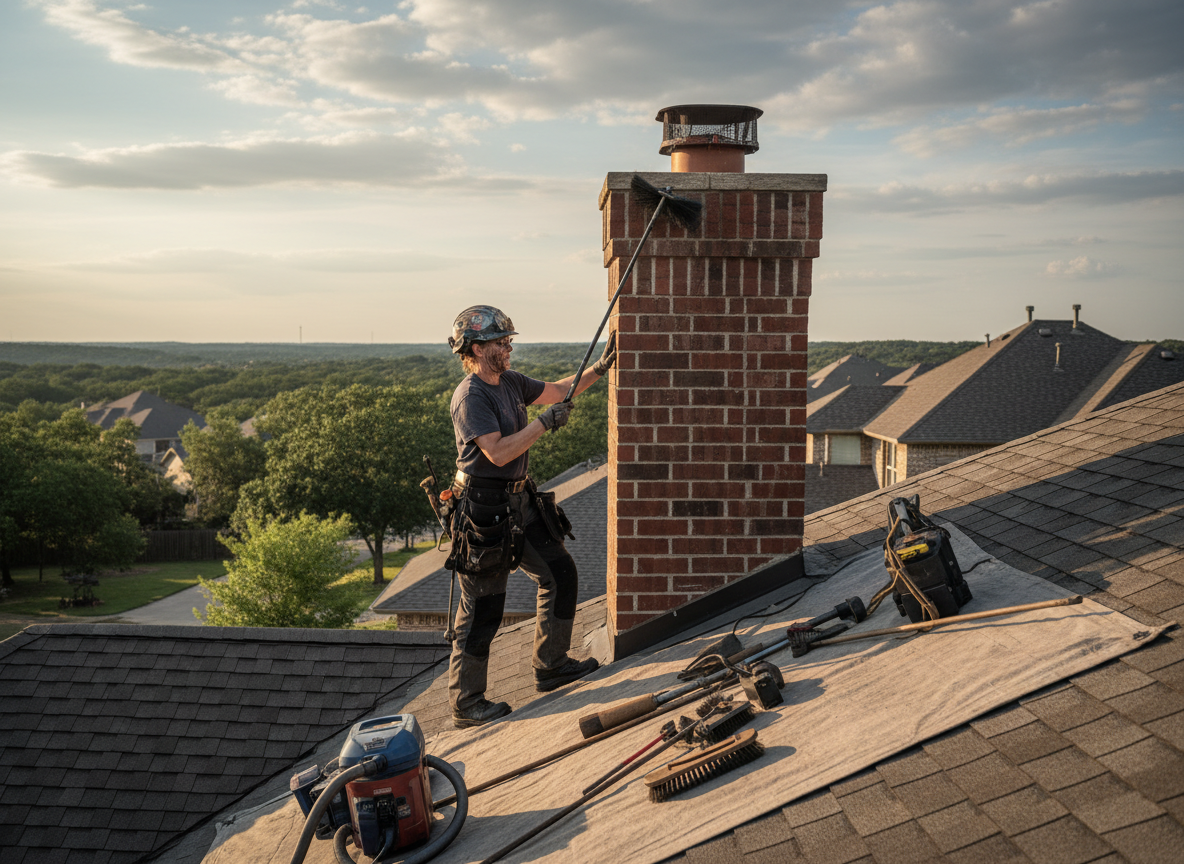
Benbrook homes, many built in the 1960s through 1980s along the Camp Bowie corridor and near the Clear Fork, often feature masonry chimneys tied to slab foundations on clay soils. These setups experience movement from seasonal moisture swings and occasional hard freezes that open mortar joints and allow water intrusion. Regular maintenance includes checking crown integrity, flue tile condition, and damper operation to prevent draft loss or water damage to ceilings.
Temperature swings common in Tarrant County accelerate creosote hardening and liner stress, especially in chimneys serving wood-burning fireplaces in single-story ranches. A thorough maintenance visit examines flashing where the chimney meets the roof deck and inspects for spalling brick faces caused by trapped moisture. Addressing these points early avoids larger structural repairs later when winter storms arrive.
Servanta Edge operates from 7901 Camp Bowie W Blvd and responds around the clock to schedule maintenance before peak heating months. The work focuses on real conditions found in Benbrook rather than generic checklists, such as verifying proper clearances around nearby cedar fencing or rooflines common on local properties.
Homeowners sometimes overlook how shifting soil near the Trinity River tributaries affects chimney plumb, leading to offset flue sections. Maintenance visits include documenting these shifts and recommending targeted tuckpointing or cap upgrades suited to the area's wind-driven rain patterns.
Technician insight
In Benbrook, the thing that catches most people out with chimney maintenance is how clay soil movement near the Clear Fork combines with freeze-thaw cycles to shift older brick chimneys just enough to crack flue tiles in homes from the Camp Bowie area.
Creosote and Minor Shift in West Benbrook Home
Homeowner reported poor draft after several cold snaps. Inspection revealed hardened creosote and slight flue offset from foundation movement on clay soil. Cleaned the flue, sealed hairline crown cracks, and confirmed stable draft. Fireplace now operates safely without further water intrusion.
How it works
- 1
Site Evaluation
Inspect the full chimney exterior and interior from roof to firebox, noting any Benbrook-specific issues like soil movement or freeze damage.
- 2
Flue Cleaning
Remove creosote and debris buildup that hardens faster due to local temperature fluctuations.
- 3
Component Check
Test damper function, crown condition, and flashing seals against water entry common in Tarrant County storms.
- 4
Report and Recommendations
Provide findings with photos and prioritized next steps based on the home's age and construction.
Pricing
Upfront quotes provided after evaluation; cost varies with chimney height, access, and condition.