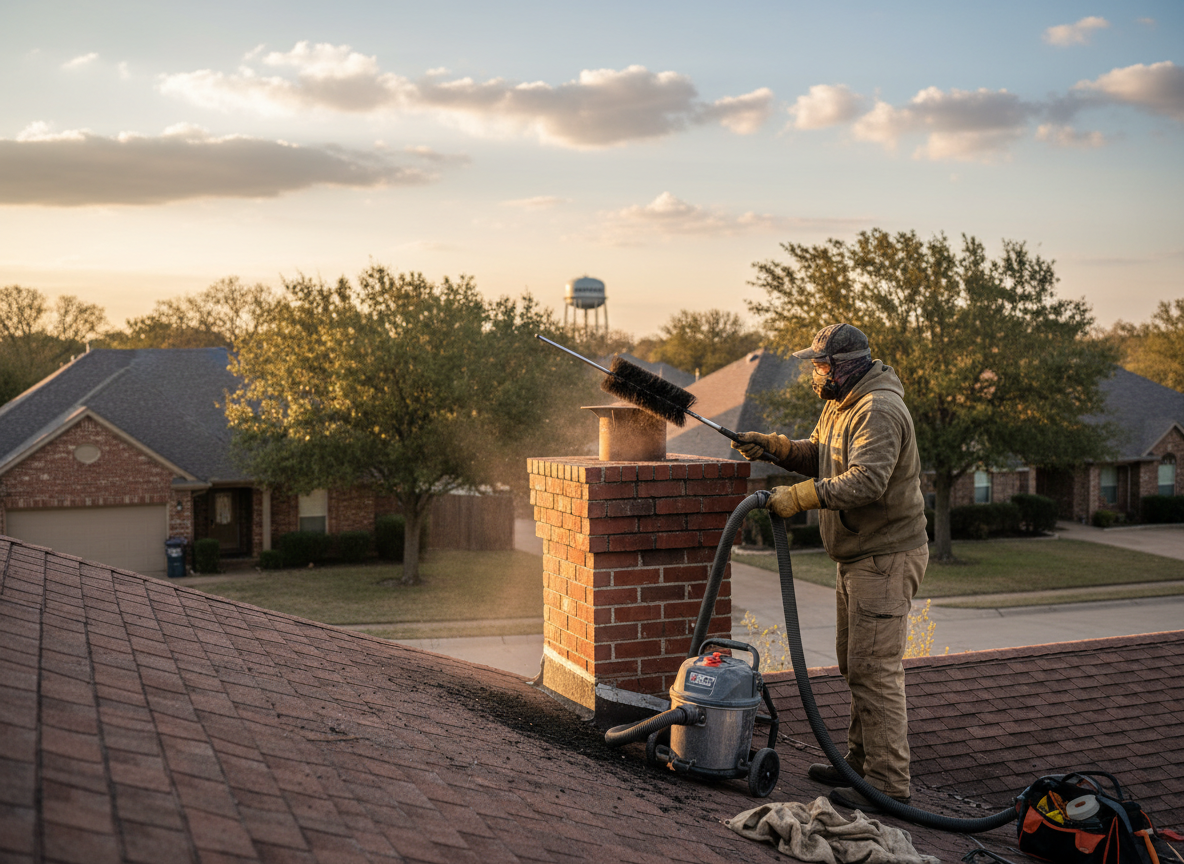
Benbrook homes built from the 1960s onward often feature masonry chimneys with clay flue liners that collect creosote faster than newer stainless systems because of the way cooler Texas nights pull moisture back into the flue after a wood fire. Regular cleaning prevents the glazed stage-three creosote that can ignite at chimney temperatures reached during a typical winter evening. Technicians start at the top, using rotary brushes sized for the actual flue dimensions rather than one-size brushes that leave residue on the corners.
Spring pollen and the occasional late freeze in Tarrant County create expansion cracks in mortar joints above the roofline; water then migrates down and mixes with soot to form acidic deposits that eat at the liner from the inside. A proper cleaning includes a camera inspection to spot these issues before they allow carbon monoxide into living spaces. Skipping the top cap check lets nesting debris from local birds fall back in within weeks of the visit.
Servanta Edge schedules most Benbrook jobs in the shoulder months before the first cold snap so homeowners avoid the rush when everyone else suddenly needs service. The work stays contained with drop cloths and HEPA vacuums because older neighborhoods like those near Dutch Branch have tight side yards where soot can drift onto neighboring patios.
Technician insight
In Benbrook, the thing that catches most people out with chimney cleaning service is how the clay liners in 1970s brick chimneys crack along the south-facing side after a hard freeze, letting water from summer storms pool inside the flue and turn soot into concrete-like scale that a standard brush cannot break up.
Hidden Scale in West Benbrook Chimney
Homeowner noticed slow draft on cooler evenings. The sweep found stage-two creosote mixed with mineral scale from repeated freeze-thaw cycles in the liner. Rotary brushing plus a second pass with a specialized scraper cleared the buildup; the camera confirmed no new cracks after the job.
How it works
- 1
Initial Safety Inspection
Technician checks roof access, chimney crown, and flashing condition before any tools enter the flue.
- 2
Rotary Brush Cleaning
Appropriate diameter brush removes creosote layers while vacuum captures debris at the fireplace opening.
- 3
Camera Scan and Report
Post-clean video inspection documents liner condition and any needed repairs before the cap is reinstalled.
- 4
Final Cleanup and Walkthrough
All equipment is removed, the fireplace area is vacuumed, and the homeowner receives the written findings.
Pricing
Cost depends on chimney height, number of flues, and creosote level; Servanta Edge provides an upfront quote after the first inspection.