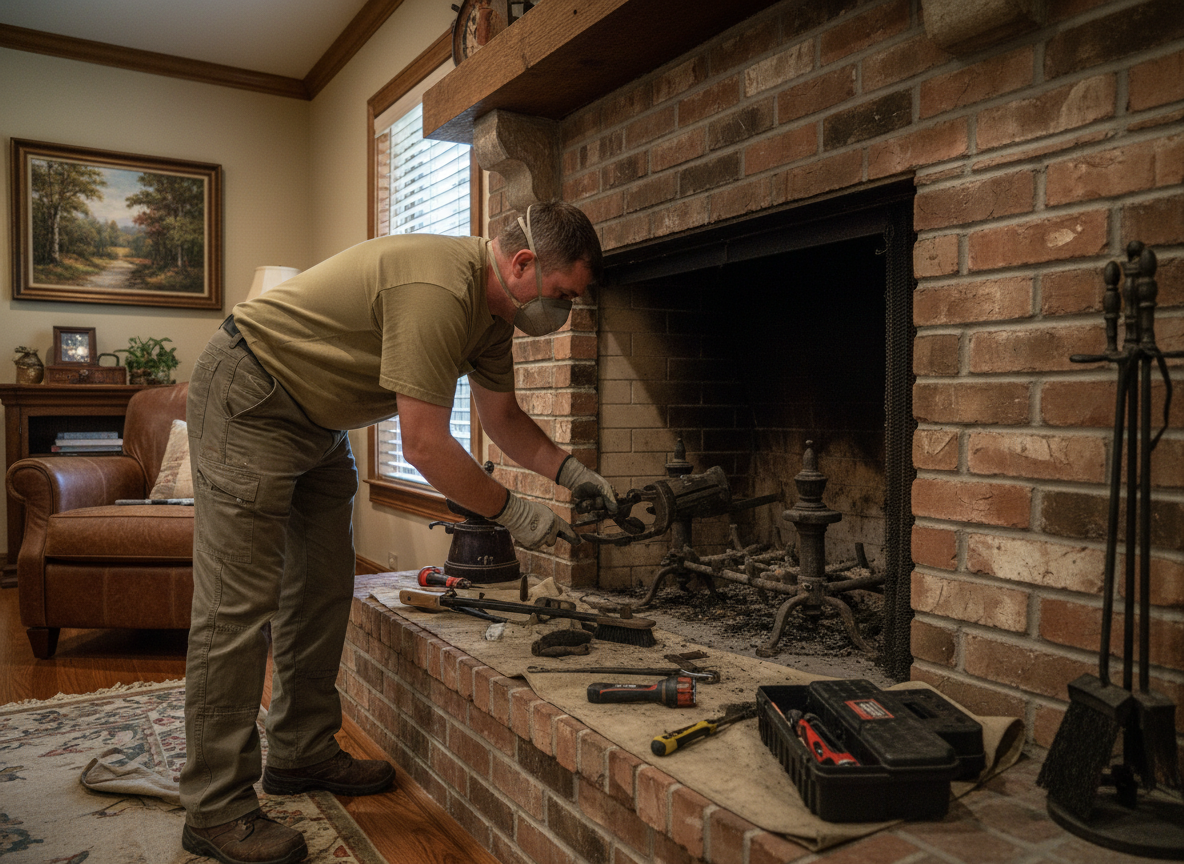
Benbrook homes built from the 1950s onward often feature masonry chimneys with cast-iron or steel throat dampers that corrode from repeated freeze-thaw cycles and high humidity after spring rains. When the damper plate warps or the pivot rod seizes, smoke back-drafts into living spaces and heat escapes even when the fireplace is unused. Technicians at Servanta Edge reach the damper through the firebox, remove creosote buildup first, then free or replace the assembly without disturbing the surrounding brickwork that has settled on Tarrant County clay soils.
Access in single-story ranch houses common along Benbrook Lake Drive is straightforward, but two-story homes near Dutch Branch require scaffold setup and careful flashing checks afterward. We always test draft with a smoke pencil after repair because a poorly sealed damper can pull conditioned air out of the house during summer, raising cooling loads. Homeowners sometimes attempt to force a stuck damper with a poker, which bends the plate and turns a simple cleaning into full replacement.
Texas wind-driven rain can enter through open dampers on exposed west-facing chimneys, saturating the smoke chamber and accelerating rust on the metal. We recommend annual inspection each fall before the first cold front arrives, especially for properties within a mile of the lake where moisture lingers longer. Proper operation also prevents wildlife entry during the long Benbrook summers when chimneys sit idle.
Technician insight
In Benbrook, the thing that catches most people out with chimney damper repair is the way our heavy clay soils shift older brick chimneys just enough to bind the damper rod after a wet winter. Homeowners try to muscle it open and bend the plate, then wonder why smoke still leaks when they close it. We always check the alignment from the roof before declaring the job done.
Stuck Damper on a 1960s Ranch
A homeowner on Benbrook's west side reported smoke rolling into the living room on the first cold night. We found the original cast-iron damper plate rusted to the stops from years of lake humidity. After freeing the rod and replacing the warped plate, the damper now opens and seals cleanly with no further back-drafting.
How it works
- 1
Initial Assessment
We open the damper from the firebox, inspect the plate, rod, and stops for corrosion or warping, and check the smoke chamber for water damage.
- 2
Cleaning and Lubrication
Creosote and rust are removed, then high-temperature lubricant is applied to the pivot points to restore smooth operation.
- 3
Repair or Replacement
Bent plates are straightened when possible; severely damaged dampers are swapped for new cast-iron units sized to the flue.
- 4
Draft Verification
A smoke test confirms the damper seals tightly when closed and allows full draft when open, with any gaps corrected before we leave.
Pricing
Most damper repairs fall in a moderate range depending on whether the plate can be salvaged or must be replaced and how much creosote must be cleared first.