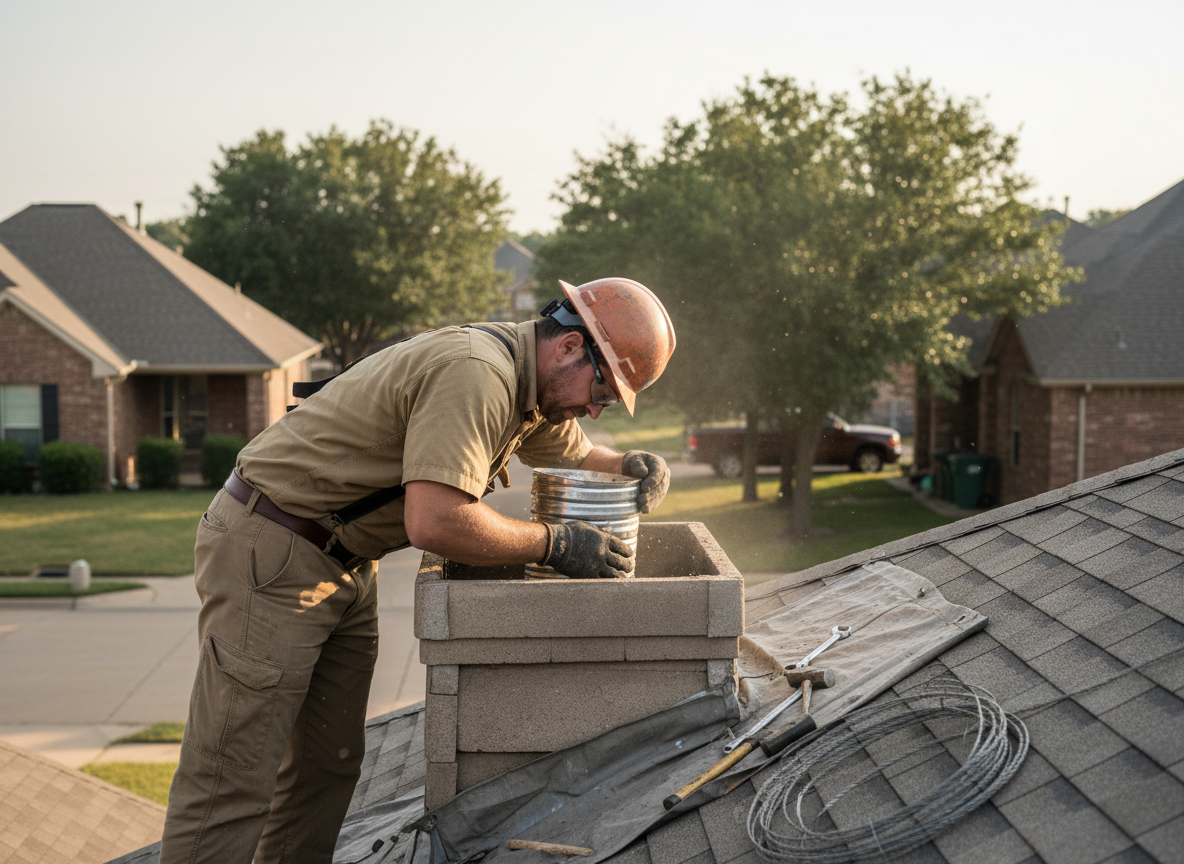
Benbrook homes built from the 1960s through the 1980s often feature masonry chimneys with original clay or early metal liners that degrade after decades of Texas heat, occasional hard freezes, and creosote accumulation. When liners crack or separate, smoke and carbon monoxide can enter living spaces, especially during the winter months when residents fire up fireplaces more often. Repair work here frequently involves accessing the flue through the roof or cleanout door while navigating tight attic spaces common in ranch-style houses near Lake Benbrook.
Stainless steel or cast-in-place liners are the typical replacements because they handle the rapid temperature swings and humidity that move through Tarrant County. Homeowners sometimes discover issues only after noticing water stains on ceilings or reduced draft that fails to pull smoke properly. We check for gaps at the flue collar, crown damage from standing water, and any settling caused by the clay-heavy soils around Benbrook that shift slightly with wet and dry cycles.
Proper liner repair also means confirming the new liner meets current clearance and termination height rules so the chimney draws correctly even when strong spring winds blow across the area. Skipping these steps often leads to callbacks when storms hit. Every job includes pulling the old liner carefully to avoid damaging surrounding brick and verifying the new installation seals tightly at both the top and bottom.
Common Liner Materials Used Locally
Stainless steel flexible liners work well for most Benbrook retrofits because they slide through existing flues without major masonry removal. Cast-in-place options provide a solid monolithic seal when the original clay has multiple fractures from past freeze events.
Technician insight
In Benbrook, the thing that catches most people out with chimney liner repair is the way our clay soils shift after heavy spring rains, causing the chimney base to settle just enough to crack the liner at the smoke chamber. Homeowners often miss this until a winter fire fills the house with smoke.
Cracked Liner After Ice Storm
A west Benbrook ranch home lost draft following a rare hard freeze. Inspection revealed a split in the original clay liner near the roofline where water had frozen and expanded. We removed the damaged section, fitted a stainless steel replacement, and sealed the joints. The chimney now draws cleanly even on windy days.
How it works
- 1
Initial Flue Assessment
We inspect the liner condition from the firebox up through the crown using cameras and visual checks to locate cracks, gaps, or blockages.
- 2
Damage Mapping
Measurements and photos document every affected section so the repair plan matches the exact layout of the chimney in the Benbrook home.
- 3
Liner Removal and Prep
Old liner sections are extracted and the flue is cleaned to prepare a smooth surface for the new liner installation.
- 4
New Liner Installation
The replacement liner is positioned, sealed at connections, and secured at the top and bottom before final testing.
- 5
Draft and Safety Check
A full smoke and draft test confirms proper function before the chimney is returned to service.
Pricing
Pricing depends on liner material, chimney height, and extent of existing damage.