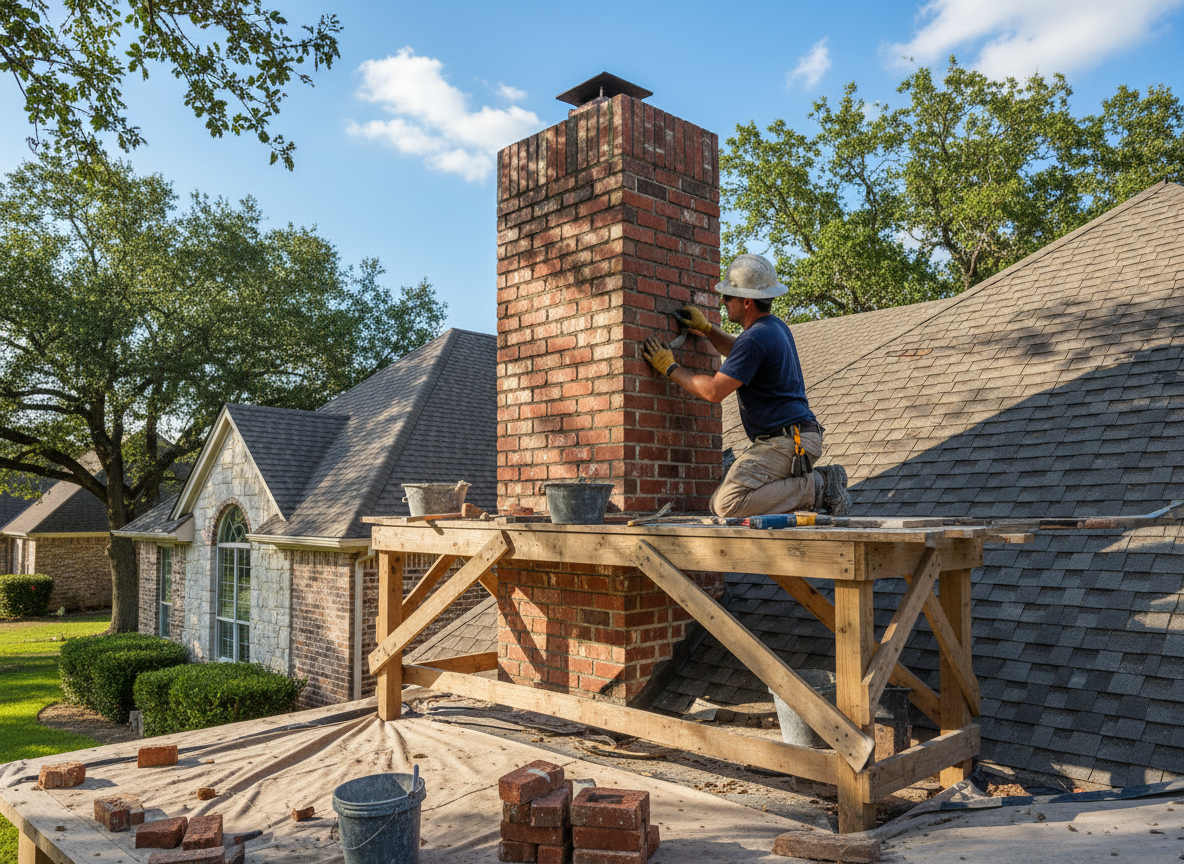
Benbrook homes built from the 1950s through the 1970s often feature masonry chimneys set on shallow footings over clay soils common in Tarrant County. These chimneys suffer from seasonal expansion and contraction that opens mortar joints and tilts the stack. Restoration begins with a full inspection of the flue liner, crown, and flashing where heavy spring rains drive water behind the brick. Technicians remove loose mortar, repoint with Type N lime-based mix suited to local temperature swings, and install new stainless-steel caps that resist the occasional hard freeze.
Water intrusion is the leading cause of failed chimneys here because Fort Worth-area thunderstorms dump several inches in a single afternoon. When the crown cracks or flashing pulls away at the roofline, moisture reaches the wood framing inside the chase. Restoration crews chase out damaged brick, install new through-wall flashing tied into existing tar-and-gravel roofs, and rebuild the crown with a slope that sheds water toward the Benbrook Lake watershed rather than into the flue. Every job includes a smoke test to confirm draft before the homeowner resumes use.
Edge cases appear in homes near the railroad tracks where vibration loosens crown mortar faster than in quieter neighborhoods. Restoration also addresses code requirements for spark arrestors when properties sit close to dry grasslands east of Benbrook. Crews carry extra stainless-steel mesh sized for local wind loads and replace any terra-cotta flue tiles that have spalled from repeated heating and cooling cycles typical of Texas winters.
Technician insight
In Benbrook, the thing that catches most people out with chimney restoration is how the clay soils around 1960s homes heave during wet springs and pull the base out of plumb, something you only see once you dig a small test hole beside the footing.
Shifted Chimney on a 1968 Benbrook Ranch
Homeowner noticed water stains on the family-room ceiling after a May thunderstorm. Inspection revealed the chimney had tilted two inches due to soil movement near the lake. Crews rebuilt the lower six courses, installed new through-wall flashing, and repointed the full height. Draft returned to normal and no further leaks appeared the following winter.
How it works
- 1
Inspection and Diagnosis
Technician climbs and photographs the entire stack, checks for lean with a level, and performs a Level II camera scan of the flue while noting soil settlement patterns common around Benbrook foundations.
- 2
Material Removal and Prep
Loose brick and mortar are cut out, damaged flue tiles removed, and the chase dried with fans after any water intrusion discovered during the wet season.
- 3
Rebuild and Waterproofing
New mortar joints are tooled, a reinforced concrete crown is poured with proper pitch, and stainless flashing is integrated at the roof deck before final smoke testing.
- 4
Final Verification
The system is tested under fire conditions, draft is confirmed, and the homeowner receives a written report with photos of the completed work.
Pricing
Upfront quotes provided after inspection; final cost depends on height, extent of brick replacement, and any liner work required.