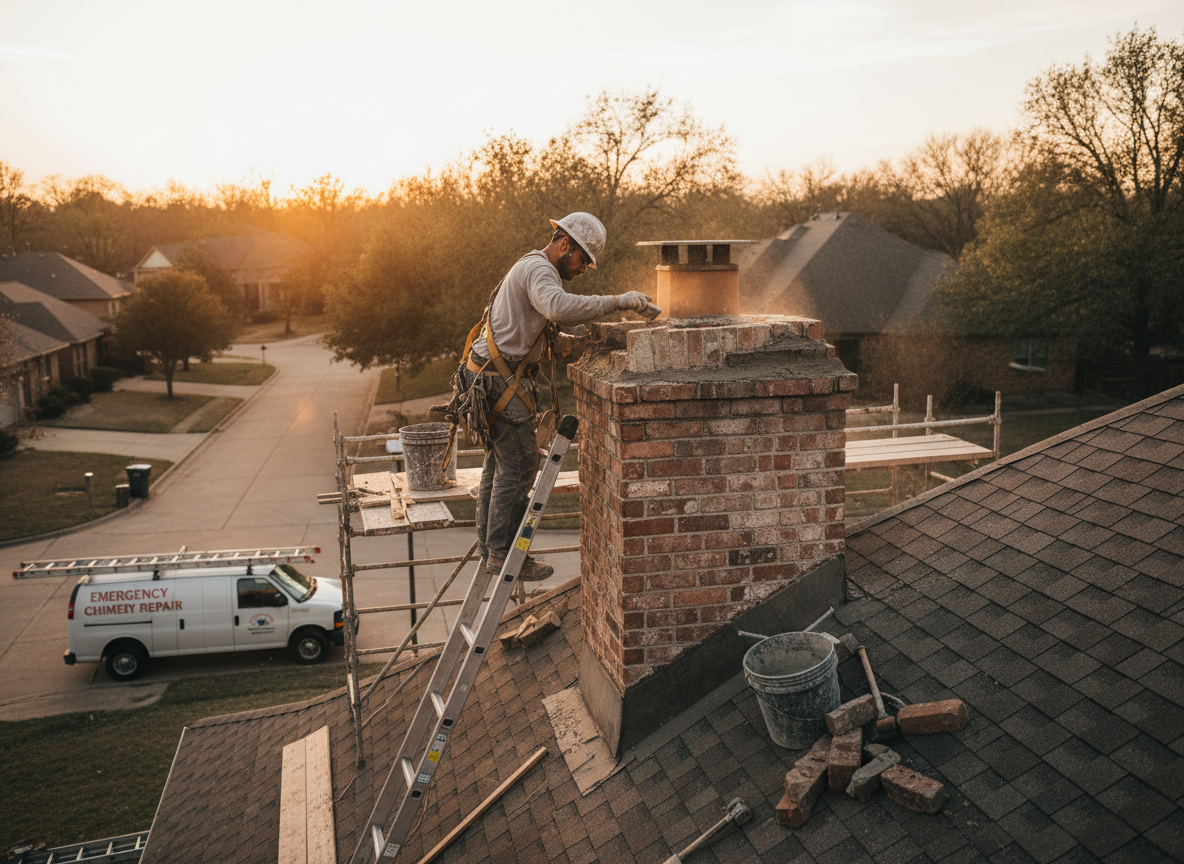
Benbrook homes built from the 1950s through the 1980s often feature masonry chimneys set in brick or stone that suffer from mortar erosion after repeated summer thunderstorms and occasional winter freezes. When heavy rain or hail hits, water can penetrate through hairline cracks in the crown or flue tiles, leading to interior leaks or creosote buildup that becomes a fire hazard. Emergency calls frequently involve sudden blockages from storm debris or dislodged bricks that prevent proper venting and create carbon monoxide risks inside the home.
Tarrant County soil shifts during wet and dry cycles can tilt chimney bases over time, especially on older lots near the Clear Fork of the Trinity River. In an emergency we first stabilize the structure, then address the immediate leak or obstruction before water reaches the attic or living space. Working at night or during active weather requires portable lighting, temporary tarping, and careful assessment of wind loads that can worsen existing damage on exposed Benbrook rooftops.
Local codes in Benbrook require proper flue lining and spark arrestors on any repaired chimney. We check for these requirements during the initial visit because missing liners or corroded dampers often turn a small emergency into repeated service calls. Homeowners along Camp Bowie West or near Benbrook Lake commonly discover issues only after a heavy downpour because the flat terrain allows water to pool against the chimney base rather than drain away quickly.
Technician insight
In Benbrook, the thing that catches most people out with emergency chimney repair is how the flat terrain around the Clear Fork lets storm water sit against chimney bases for days, turning small mortar gaps into full leaks faster than in hillier parts of Tarrant County.
Thunderstorm Leak Near Benbrook Lake
Heavy rain after a summer storm caused water to enter through the chimney of a 1970s brick home. We found cracked crown mortar and a displaced flue tile. We rebuilt the crown section, resealed the flue, and added temporary flashing until the mortar cured, stopping the attic leak.
How it works
- 1
Immediate Assessment
We arrive on site and inspect the chimney exterior, flue, and surrounding roof for active leaks, cracks, or blockages while checking for carbon monoxide buildup indoors.
- 2
Safety Securing
Temporary tarping or bracing is installed to prevent further water entry or structural movement until permanent repairs can be completed.
- 3
Targeted Repair
Damaged mortar, flue tiles, or crown sections are replaced or sealed using materials matched to the existing masonry common in Benbrook homes.
- 4
Final Testing
We verify proper draft, confirm no leaks remain, and walk through the findings with the homeowner before leaving the property.
Pricing
Upfront quotes based on visible damage and required materials; no hidden fees.