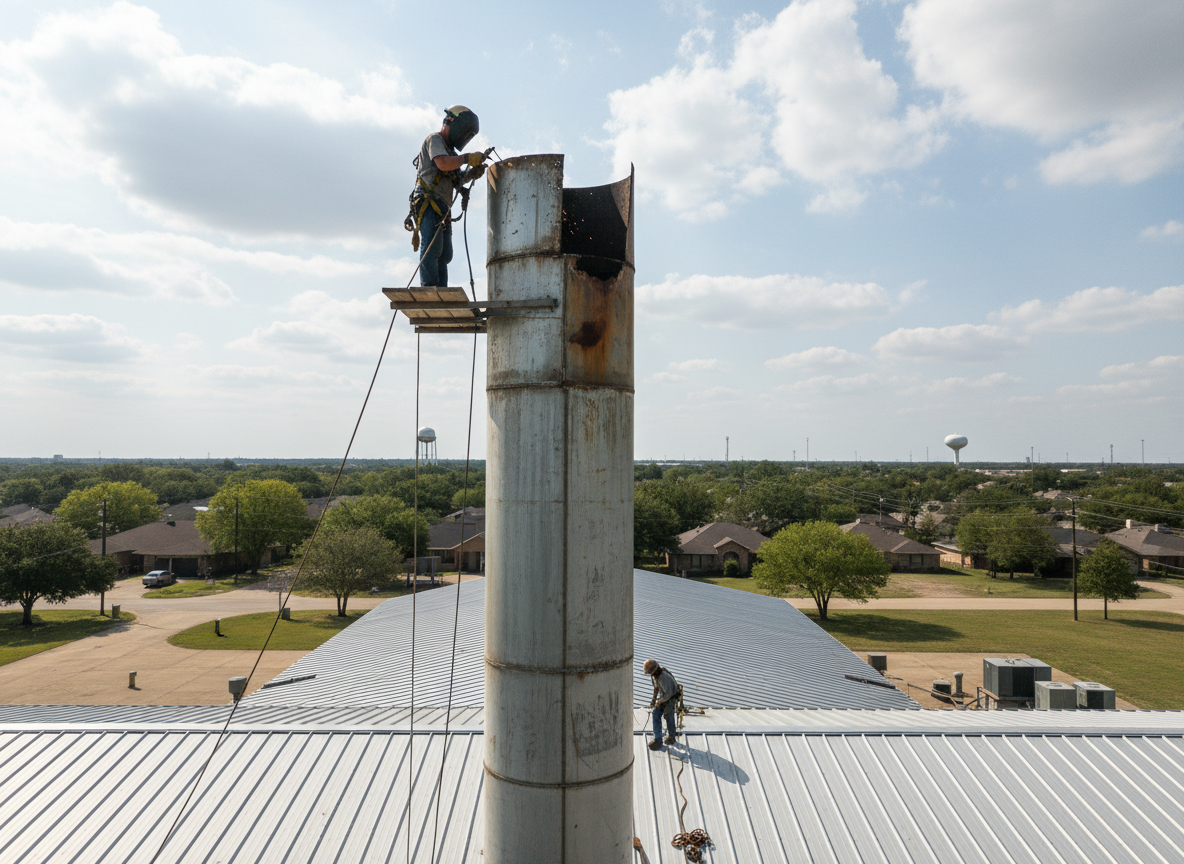
Benbrook homes built from the 1950s through the 1980s commonly feature metal flue liners inside masonry chimneys. These liners suffer pitting and seam failure when rainwater enters through damaged caps during the intense spring thunderstorms common in Tarrant County. Once moisture reaches the metal, summer humidity accelerates rust while occasional winter freezes expand the corrosion, creating gaps that allow smoke and creosote back into living spaces.
Repair work on these systems requires cutting out rusted sections without disturbing the surrounding brick or mortar, then fitting new stainless or galvanized segments that match the original gauge. Technicians must also check the flashing where the chimney meets the roof, because wind-driven rain on the gently sloped roofs typical in Benbrook neighborhoods often bypasses old sealant and reaches the metal liner from above.
Code compliance in Benbrook follows current IRC standards for chimney height and clearance; any repair that alters liner diameter or termination height must be documented so the homeowner can pass future inspections. Skipping this step risks carbon monoxide issues during the long heating season when residents run fireplaces more frequently after cold fronts move through North Texas.
Technician insight
In Benbrook, the thing that catches most people out with metal chimney repair is how quickly hail dents from spring storms turn into hidden rust points under the cap that only show up after the next freeze cycle. Homeowners often assume a new cap alone fixes it, but the dented liner below keeps leaking.
Hail-Dented Liner After Spring Storm
A Benbrook homeowner noticed smoke odors after heavy rain. Inspection revealed hail dents allowing water into the metal flue. We cut out the damaged lower section, installed a new stainless segment, and resealed the cap. The fireplace now drafts cleanly with no further moisture entry.
How it works
- 1
Initial Assessment
Technician climbs to inspect the metal liner, cap, and flashing for visible rust, dents, and separation points.
- 2
Moisture and Draft Testing
Smoke and water tests confirm leak locations and verify draft performance before any cutting begins.
- 3
Targeted Section Replacement
Damaged metal segments are removed and new matching pipe is installed with proper overlaps and high-temperature sealant.
- 4
Final Verification
System is retested for leaks and draft, with photos provided showing the repaired sections.
Pricing
Upfront quotes after inspection; cost depends on number of sections replaced and roof access difficulty.