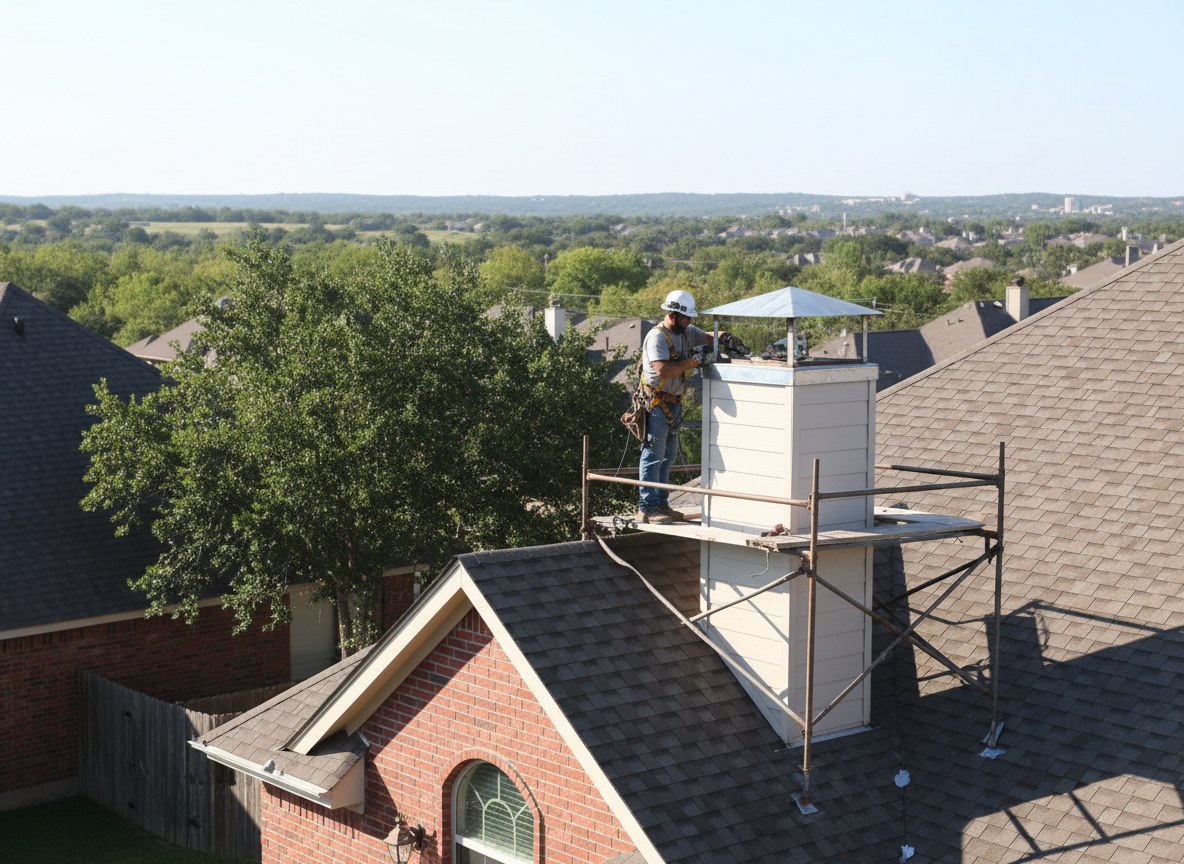
Prefabricated chimneys in Benbrook homes built from the 1960s onward often use stainless or galvanized steel liners inside a metal chase. These systems handle the area’s hot summers and occasional hard freezes, but the expansion and contraction around the roof penetration commonly loosens the flashing and lets water reach the insulation blanket. Over time that moisture corrodes the inner liner, especially where creosote has built up from wood-burning fireplaces common in older ranch houses near Benbrook Lake.
When a homeowner reports a smoky smell or visible rust streaks on the chase exterior, the first step is confirming whether the unit is a listed factory-built chimney and checking the manufacturer’s clearance requirements. Many Benbrook properties sit on clay-heavy soil that shifts after spring rains, pulling the chase slightly out of plumb and stressing the slip joints. Technicians must inspect both the interior flue and the exterior termination cap for proper height above the roofline to maintain draft during the area’s sudden wind gusts.
Repair work focuses on replacing damaged liner sections with matching UL-listed pipe, resealing all joints with high-temperature silicone rated for the local temperature swings, and reinstalling a new chase cover that accounts for the prevailing southwest winds. In cases where the original installation lacked adequate support brackets, additional strapping is added to the attic rafters to prevent future movement. Homeowners are advised to schedule these repairs before the first freeze, since a cracked or separated liner can allow carbon monoxide to enter living spaces once the heating season begins.
Technician insight
In Benbrook, the thing that catches most people out with prefabricated chimney repair is how the clay soil along the Trinity River bottom shifts after heavy spring rains and pulls the chase away from the roof deck, opening gaps that standard flashing never anticipated.
Separated Liner in a 1970s Benbrook Ranch
Homeowner noticed water stains on the living-room ceiling after a winter storm. Inspection showed the prefabricated liner had pulled apart at a slip joint because the chase had tilted from soil movement. We replaced the affected section, added attic strapping, and resealed the roof flashing. The system passed draft testing and no further leaks occurred.
How it works
- 1
Initial Assessment
Technician arrives at the Benbrook address, confirms the chimney model, and checks for visible exterior damage or water staining around the chase.
- 2
Internal Inspection
Camera inspection of the liner identifies corrosion, creosote buildup, or separated joints caused by soil movement common in Tarrant County.
- 3
Component Replacement
Damaged liner sections and flashing are replaced with matching listed parts, then all connections are resealed against wind-driven rain.
- 4
Final Testing
Draft test and smoke test verify proper operation before the system is returned to service.
Pricing
Upfront quote after on-site inspection; cost driven by liner length, access difficulty, and whether chase realignment is required.