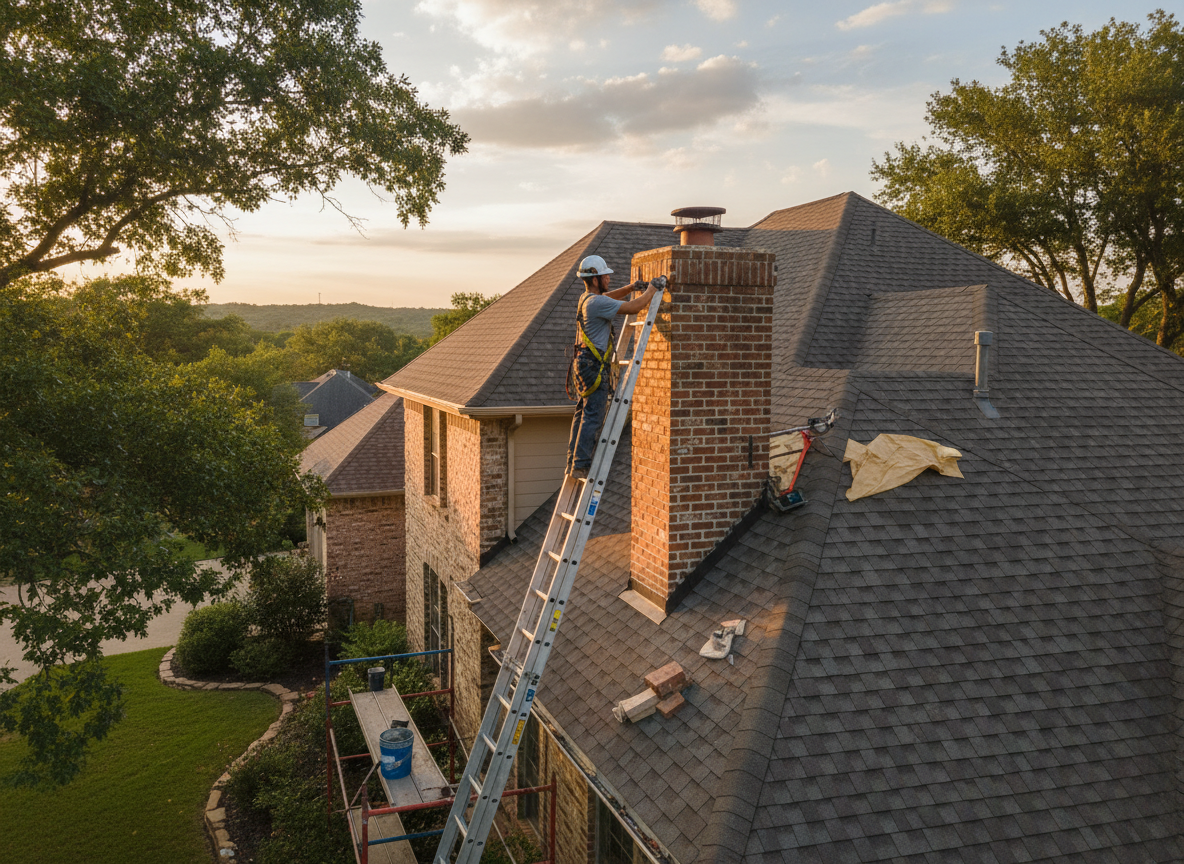
Benbrook homes built from the 1950s onward often feature masonry chimneys tied into brick or stone exteriors. Freeze-thaw cycles common in Tarrant County winters drive water into mortar joints and flue liners, creating spalling and draft loss that shows up first on upper floors. Servanta Edge techs start every job by checking for creosote buildup and crown cracks before any masonry work begins.
Rain from spring storms and the occasional hard freeze in winter push water past failed flashing where the chimney meets the roof deck. In neighborhoods west of Benbrook Lake, soil movement from clay expansion can tilt chimneys slightly, opening gaps that standard caulk will not hold. Repairs here focus on stainless steel liners or refractory mortar that accommodate movement without reopening the same season.
Code requirements in Benbrook follow current IRC standards for clearance to combustibles and proper termination height above the roofline. Homeowners frequently discover that previous repairs used standard brick mortar instead of high-temperature refractory mixes, which fails quickly once temperatures cycle. Servanta Edge replaces only the damaged sections and documents the work so future inspections pass without issue.
Seasonal Guidance
Winter calls increase after the first freeze because small cracks that stayed dry all summer suddenly allow water to freeze and widen. Summer jobs focus more on crown sealing and cap replacement before heavy rains arrive.
Technician insight
In Benbrook, the thing that catches most people out with Residential chimney repair is how freeze-thaw cycles on older brick chimneys near the lake cause hidden crown cracks that let water reach the attic before any draft problem appears.
Tilted Chimney After Freeze
A homeowner in a 1960s Benbrook neighborhood reported water stains near the fireplace after a hard freeze. Inspection showed the crown had cracked and the chimney had shifted slightly due to clay soil movement. We rebuilt the crown with refractory concrete, installed a new stainless liner, and resealed the flashing. The draft returned to normal and no further water entered the attic.
How it works
- 1
Site Inspection
Tech examines the chimney exterior, crown, flashing, and flue from the top down while noting any nearby tree cover or roof pitch that affects water flow.
- 2
Diagnosis and Quote
Findings are explained on site with photos; an upfront quote covers the specific repairs needed rather than a blanket price.
- 3
Masonry and Liner Work
Damaged mortar or brick is removed and replaced with refractory materials; a stainless liner is installed if the existing flue is compromised.
- 4
Final Test and Cleanup
Draft is verified with a smoke test, debris is removed, and the work area is left clean before departure.
Pricing
Upfront quotes provided; final cost depends on extent of masonry damage, liner needs, and roof access.