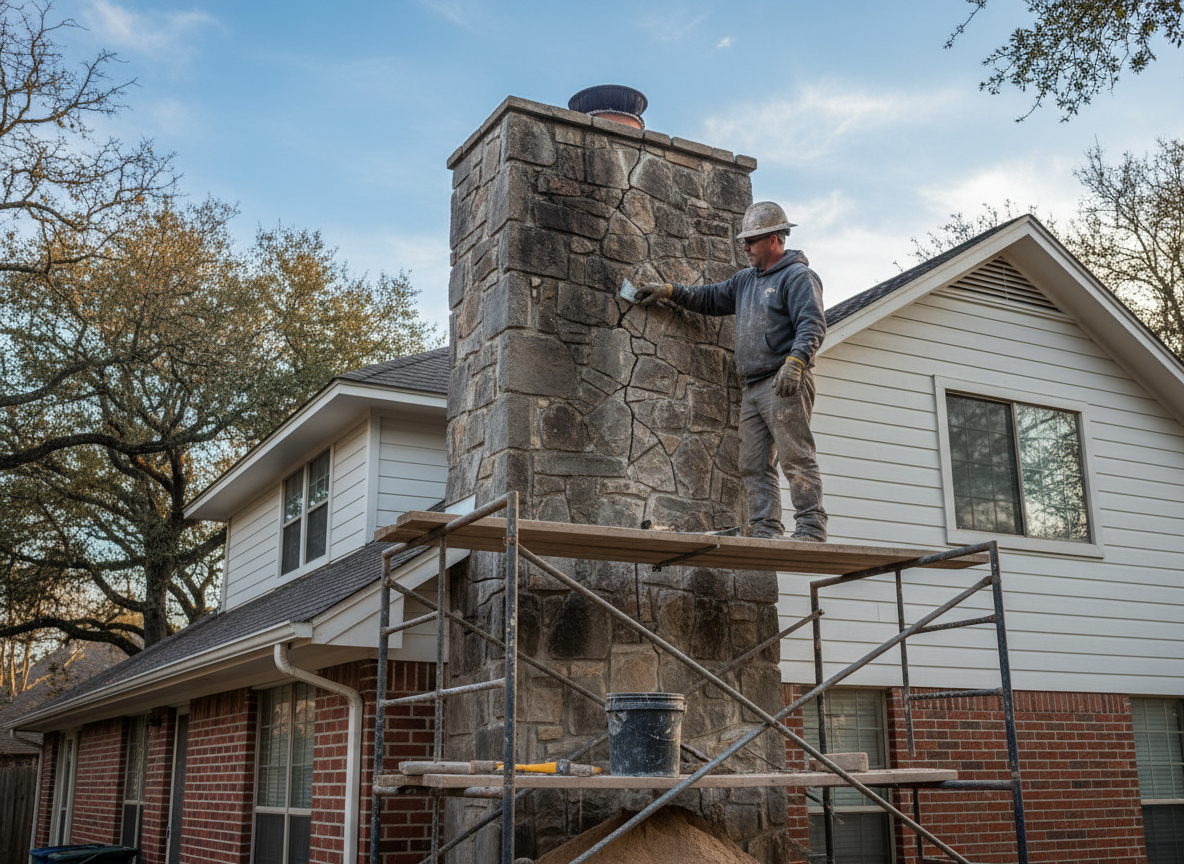
Stone chimneys in Benbrook homes, especially those in neighborhoods near Lake Benbrook and along the Clear Fork Trinity River, often show mortar erosion after decades of exposure. Tarrant County freeze-thaw cycles combined with summer thunderstorms push water into joints, loosening fieldstone or limestone and allowing leaks into attics. Older construction from the 1960s through 1980s used softer lime mortar that crumbles faster under local humidity swings than modern mixes. Repair requires matching the original stone color and joint profile so the stack blends with the roofline without drawing attention from neighbors or HOA inspectors.
When stones shift, the flue liner can crack and create carbon monoxide pathways or block draft. In Benbrook, wind-driven rain from the west commonly saturates the prevailing side of chimneys on single-story ranch homes. Technicians remove failed mortar with hand tools to avoid damaging surrounding stone, then repoint with a breathable lime-based mix that accommodates minor movement from the clay-heavy soils common here. Flashing at the roof intersection must be lifted and resealed because settled foundations tilt the chimney slightly over time, breaking the original seal.
Homeowners sometimes attempt DIY caulk repairs that trap moisture and accelerate spalling on the next freeze. Proper work includes checking the crown for hairline cracks that let water run down the flue and inspecting the rain cap for rust that directs flow inward. In Benbrook, crews also verify the chimney is plumb after repair because prevailing winds and occasional straight-line storms can exert enough force to worsen any lean in taller stacks.
Access on Benbrook lots is usually straightforward from the street side, but mature oak and cedar trees around many properties require careful staging to protect both the chimney and landscaping. Work stops during active thunderstorms, which are frequent in spring, so scheduling accounts for weather windows rather than rushing jobs.
Technician insight
In Benbrook, the thing that catches most people out with stone chimney repair is how the clay soils around Lake Benbrook cause slow foundation settlement that tilts older chimneys just enough to break flashing seals year after year.
Loose Stones on West-Facing Chimney
Homeowner in a 1970s Benbrook ranch noticed water stains on the living-room ceiling after spring storms. Inspection revealed eroded mortar and three shifted stones on the prevailing west side. Crew removed failed mortar, repointed with lime mix, and resealed the flashing. The stack is now stable and no further leaks have occurred.
How it works
- 1
Initial Inspection
Technician climbs the roof to examine mortar joints, stone condition, crown, flashing, and flue alignment from both exterior and interior access points.
- 2
Damage Assessment
Loose or missing stones are documented along with water intrusion paths; soil movement effects on the foundation are noted for Benbrook clay conditions.
- 3
Mortar Removal and Repointing
Failed mortar is cut out by hand, joints are cleaned, and new lime-based mortar is applied in layers to match original appearance and allow breathability.
- 4
Flashing and Crown Repair
Roof flashing is lifted and resealed; any crown cracks are addressed to prevent future water entry before final cleanup.
Pricing
Pricing depends on chimney height, extent of stone movement, and whether flashing or crown work is required; upfront quote follows on-site inspection.